
An amazing number of rarities have been found here in the spring and fall: Eastern Wood-Pewee, Red-eyed Vireo, Northern Parula, and Chestnut-sided, Blackburnian, Bay-breasted, Blackpoll, Black-and-white, and Hooded warblers, and Rose-breasted Grosbeak.
Howe and Watt Avenue Accesses
Throughout the year informal trails provide access to the riparian forest. In the winter this is a good area for sparrows and wrens. During spring and fall migration, look for warblers, vireos, and flycatchers in the oaks, willows, and cottonwoods.
California State University, Sacramento
In spring, look for migrating warblers, vireos, flycatchers, and grosbeaks. In winter, look for Dark-eyed Junco, crowned sparrows, winter warblers, Ruby-crowned Kinglet, Cedar Waxwing, Red-breasted Sapsucker, and Hermit Thrush.
Glenn Hall Park, Paradise Beach
The willow covered sand bars in this area are good for migrants and resident breeding birds, wrens, towhees, and other small passerines. Crossing the levee from the parking lot, you can follow several trails, all leading to the riverfront. Be aware that much of the area is very sandy.
Bushy Lake and Cal Expo Floodplain
Birding this area can be especially good in the spring and fall because the riparian habitat around the lake, especially willows and cottonwoods, attracts many migrating warblers, vireos, and flycatchers.
Purple Martins in Sacramento
The Western subspecies of Purple Martin is uncommon and declining, but the City of Sacramento is host to a few small breeding colonies that have adapted to nesting in “weep holes” under freeway overpasses.
East Lawn Cemetery
If you have only a few hours to spare for birding on a winter weekend morning, you might want to visit East Lawn Cemetery on Folsom Boulevard in East Sacramento. Filled with winter residents, over the years, Townsend’s Warbler, Black-throated Gray Warbler, and Black-and-white Warbler have been found here in the winter. Well maintained and paved roads with limited and slow moving vehicles wind through the cemetery. Handicapped parking and accessible restrooms are provided.
William Land Park
The large conifers and berry-laden shrubs and trees of William Land Park attract winter flocks of American Robin, Cedar Waxwing, Yellow-rumped Warbler, Dark-eyed Junco, and American Goldfinch. This is a good place to look for wintering Varied Thrush (under the redwoods), Red-breasted Nuthatch, Golden-crowned Kinglet, Townsend’s Warbler, Purple Finch and Pine Siskin.
Reichmuth Park
Reichmuth Park, for its size, is one of the great magnets for migrating landbirds in the Sacramento area. Sixteen warbler species have been recorded here, including all of the West Coast species plus Black-and-white Warbler, Northern Parula, American Redstart, Hooded Warbler, and Canada Warbler.
Greenhaven Lake
Public access to Greenhaven Lake has diminished to the point where it's no longer a great birding destination, but worth a check if you're in the area. In fall and winter, large flocks of Common Merganser, Ruddy Duck, gulls, Clark’s Grebe, Ring-necked Duck, Lesser Scaup, Canvasback, Bufflehead, Common Goldeneye and other water birds may be found.
Garcia Bend Park and Marriott Park
Garcia Bend Park is worth a visit in spring and fall to look for migrating landbirds in the riparian growth and Caspian or Forster’s Terns over the river. Marriott Park has large valley oaks that attract migrating warblers, vireos, tanagers and others in spring.
Chorley Park
Chorley Park is a small city park that harbors migrating land birds and nesting White-tailed Kite in spring. This area consists of weeds, willows, and cottonwood trees.
City of Sacramento Urban Birding Tour
This tour of urban parks begins in William Land Park and continues south. From Interstate 5, exit at Sutterville Road and turn left. After crossing the overpass, go right at the sign for Riverside Boulevard which then circles around to head north to William Land Park. From William Land Park continue the tour south to the other urban parks.
William Land Park
Although most of the area south of William Land Park has been taken over as a residential area, the birding is surprisingly good in the few remaining natural spots. Probably the best is the “panhandle” along Riverside Boulevard between 11th and 13th Avenues.
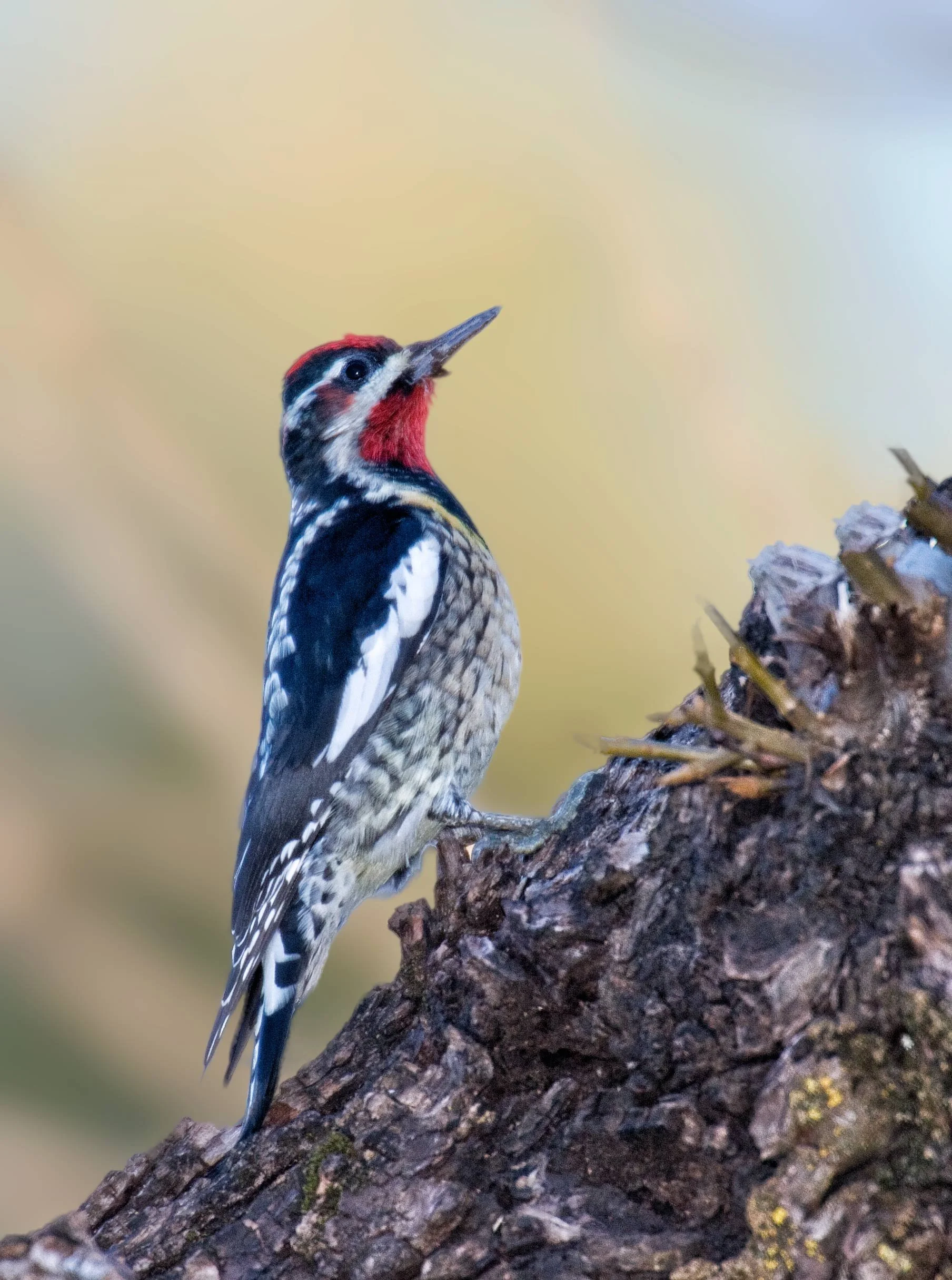
Red-naped Sapsucker © Ray Rozema
Birding the site: Large conifers, and berry-laden shrubs and trees attract winter flocks of American Robin, Cedar Waxwing, Yellow-rumped Warbler, Dark-eyed Junco, and American Goldfinch. Red-breasted Sapsucker is usually present and Red-naped and Yellow-bellied Sapsuckers have been seen in the area. Hutton’s Vireo can usually be found in the evergreen oaks. This is as good a place as any in Sacramento to look for wintering Varied Thrush (under the redwoods), Red-breasted Nuthatch, Golden-crowned Kinglet, Townsend’s Warbler, Purple Finch and Pine Siskin. eBird Sightings
Directions to William Land Park: From downtown Sacramento, take Interstate 5 for 2.0 miles south of Highway 50 and exit at Sutterville Road and turn left. After crossing the overpass, go right at the sign for Riverside Boulevard which then circles around to head north to William Land Park.
From the William Land Park, proceed south on Riverside Boulevard to the next location on the tour, Reichmuth Park. Turn left at 43rd Avenue to Gloria Drive and turn right. Parking is available in the park and along Gloria Drive. The nature trail begins east of the Sump 55 building to the south of the parking lot.
Reichmuth Park
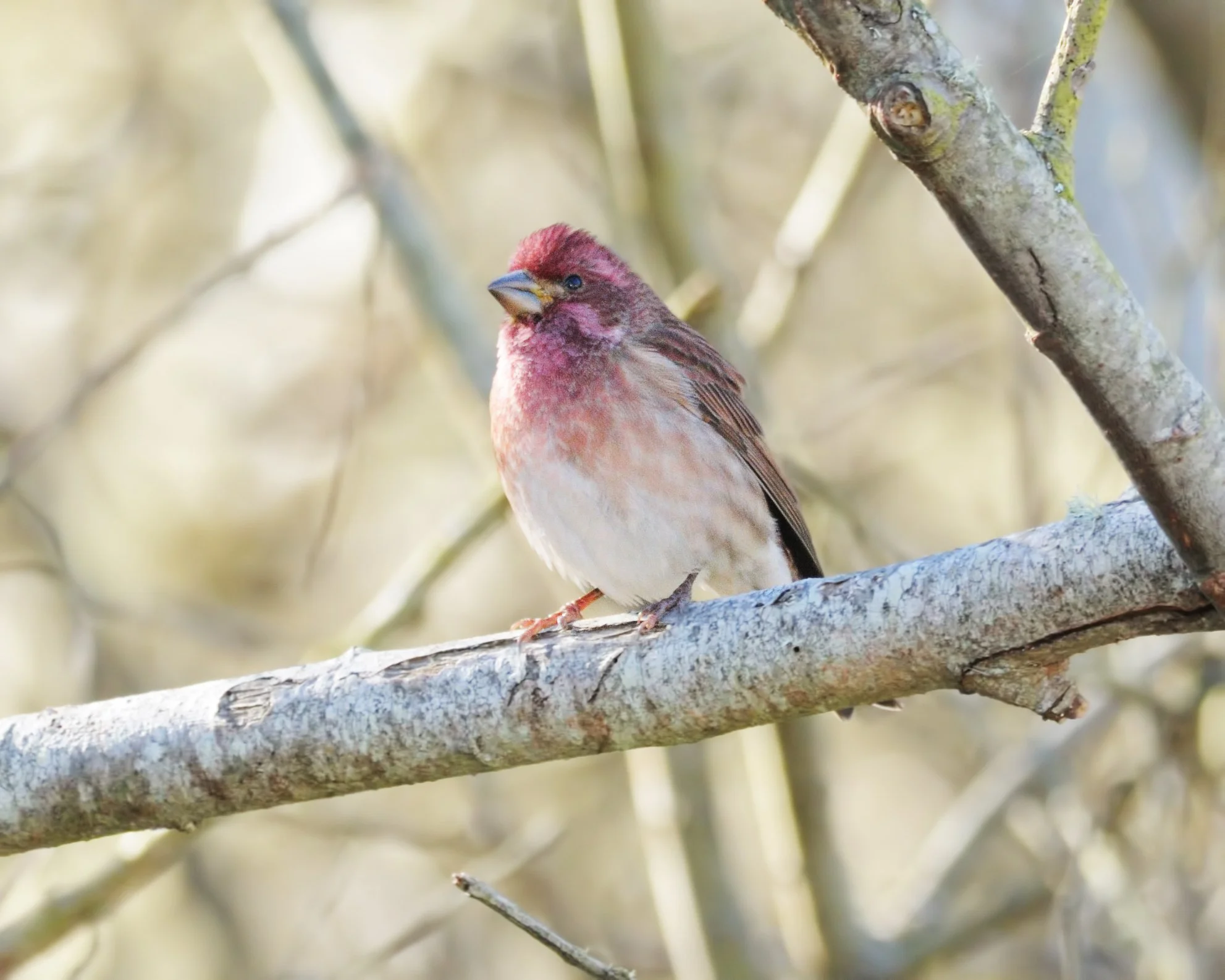
Purple Finch © Daniel Lee Brown
Reichmuth Park, formerly an oxbow lake, is now playing fields and a swampy, wooded nature area. The low-lying soccer fields revert to a lake in rainy winters, attracting California, Ring-billed and Short-billed Gulls. When dry, they attract American Crow, Blackbirds, American Pipit and American Robin. In recent years, the City of Sacramento approved an agreement with a Frisbee golf club to open the park to this activity. Large areas of previously dense habitat have been removed opening up the trails to allow for Frisbee golf. Consider visiting during the week as weekends can be very busy.
Birding the site: The nature area, for its size, is one of the great magnets for migrating landbirds in the Sacramento area. Sixteen warbler species have been recorded here, including all of the West Coast species plus Black-and-white Warbler, Northern Parula, American Redstart, Hooded Warbler, and Canada Warbler. Western Warbling Vireo, Western Tanager, Western Flycatcher, and Willow Flycatcher are common migrants and Olive-sided, Hammond’s, and Dusky flycatchers are also regular migrants. Hutton’s and Cassin’s vireos migrate through and occasionally overwinter. Hooded Oriole nesting in the fan palms in nearby yards bring their families to the park in August and September. Swainson’s Thrush skulk through the thickets in May. Lazuli Bunting feed in the tall grasses in August and September. Hummingbirds are ever present: Anna’s year-round; Black-chinned in spring and summer. Watch for their nests low in the blackberries. Rufous/Allen’s types migrate from July through September. Winter visitors include Wood Duck, Cooper’s and Sharp-shinned Hawks, thrushes, Ruby-crowned Kinglet, Orange-crowned Warbler, many sparrows, and Purple Finch. Resident birds are: Red-shouldered Hawk, Downy and Nuttall’s Woodpeckers, Bewick’s and Northern House Wrens, Northern Mockingbird, Spotted Towhee, and House Finch. Careful scrutiny of the park’s birdlife at almost any season is bound to reveal something interesting. Close to this location, from March through the summer, Northern Rough-winged Swallow nest in drain holes where Riverside Boulevard, Seamas, 35th and 43rd Avenues pass under Interstate 5. eBird Sightings
Directions to Reichmuth Park: From the William Land Park, proceed south on Riverside Boulevard. Turn left at 43rd Avenue to Gloria Drive and turn right. Parking is available in the park and along Gloria Drive. The nature trail begins east of the Sump 55 building to the south of the parking lot.
From Reichmuth Park proceed to the next location on the tour, Greenhaven Lake. Take Shoreside Drive south (0.7 mile west of I-5), and turn left on Lake Vista Court. There are 3 parcels on this street where you can look through hog-wire fencing to view the lake.
Greenhaven Lake
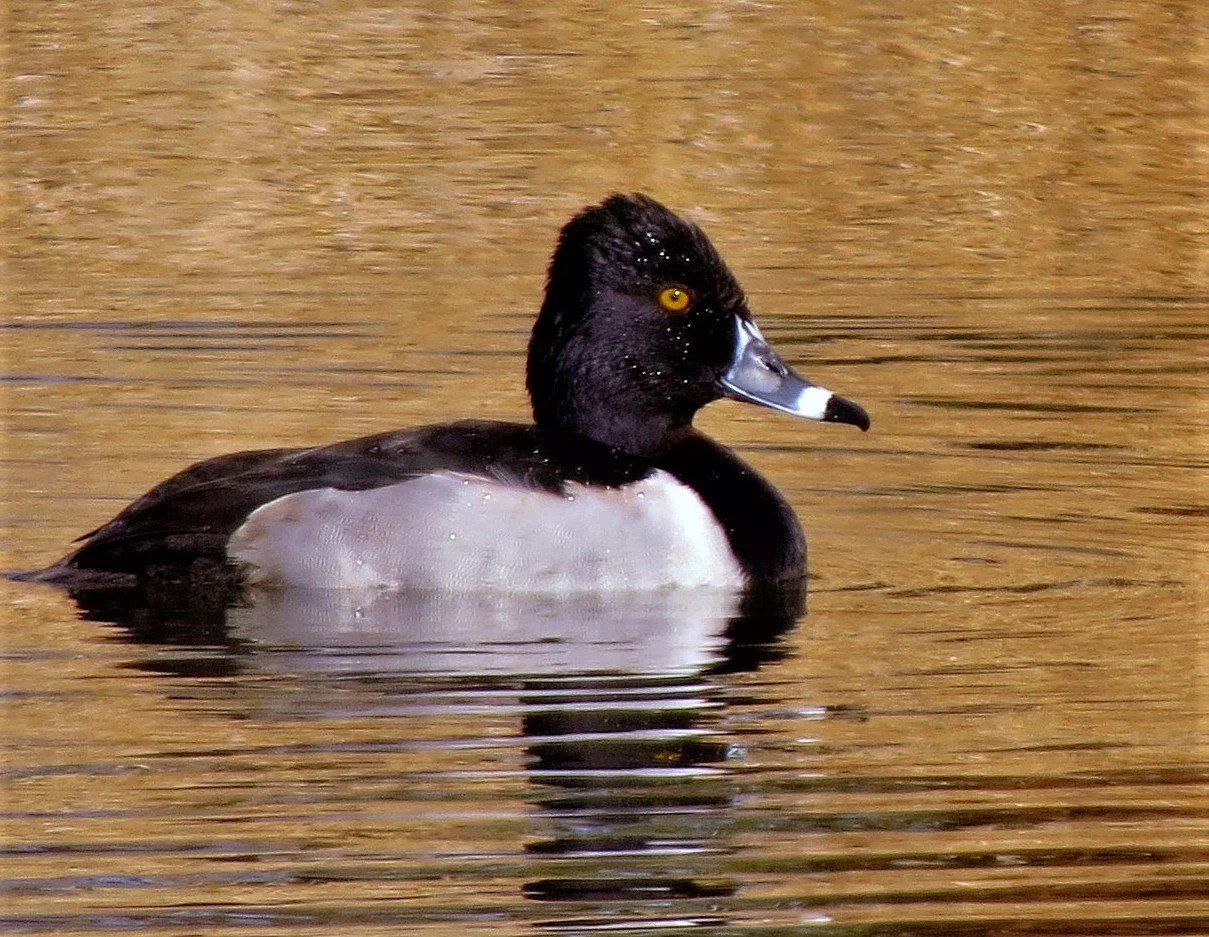
Ring-necked Duck © Chris Conard
Public access has been diminished to the point where it's no longer a great birding destination, but worth a check if you're in the area. In fall and winter, large flocks of Common Merganser (a Red-breasted Merganser may occasionally be found), Ruddy Duck, Gulls (mostly California and Ring-billed, but occasionally Short-billed, American Herring, and Iceland) plus occasional Western and Clark’s Grebes, Ring-necked Duck, Lesser Scaup, Canvasback, Bufflehead, Common Goldeneye and other water birds may be found. Green Heron and Belted Kingfisher forage along the shoreline, and Caspian Tern visits in the spring and summer. eBird Sightings
Directions to Greenhaven Lake: Take Shoreside Drive south from Riverside Boulevard (0.7 mile west of I-5), and turn left on Lake Vista Court. There are 3 parcels on this street where you can look through hog-wire fencing to view the lake.
From Greenhaven Lake proceed to the next location on the tour, Garcia Bend Park. Continue south on Riverside Boulevard, which turns into Pocket Road. Garcia Bend Park will be on your right opposite Windbridge Drive. To go directly to Garcia Bend, exit Interstate 5 at Pocket Road (6.0 miles south of Highway 50) and head west for 1.9 miles; the park will be on your left. For Marriott Park, from Pocket Road just west of Interstate 5, go south on Greenhaven Road for 0.2 mi, then turn left and drive 0.2 mi east on Grand River Drive to the park.
Garcia Bend Park and Marriott Park
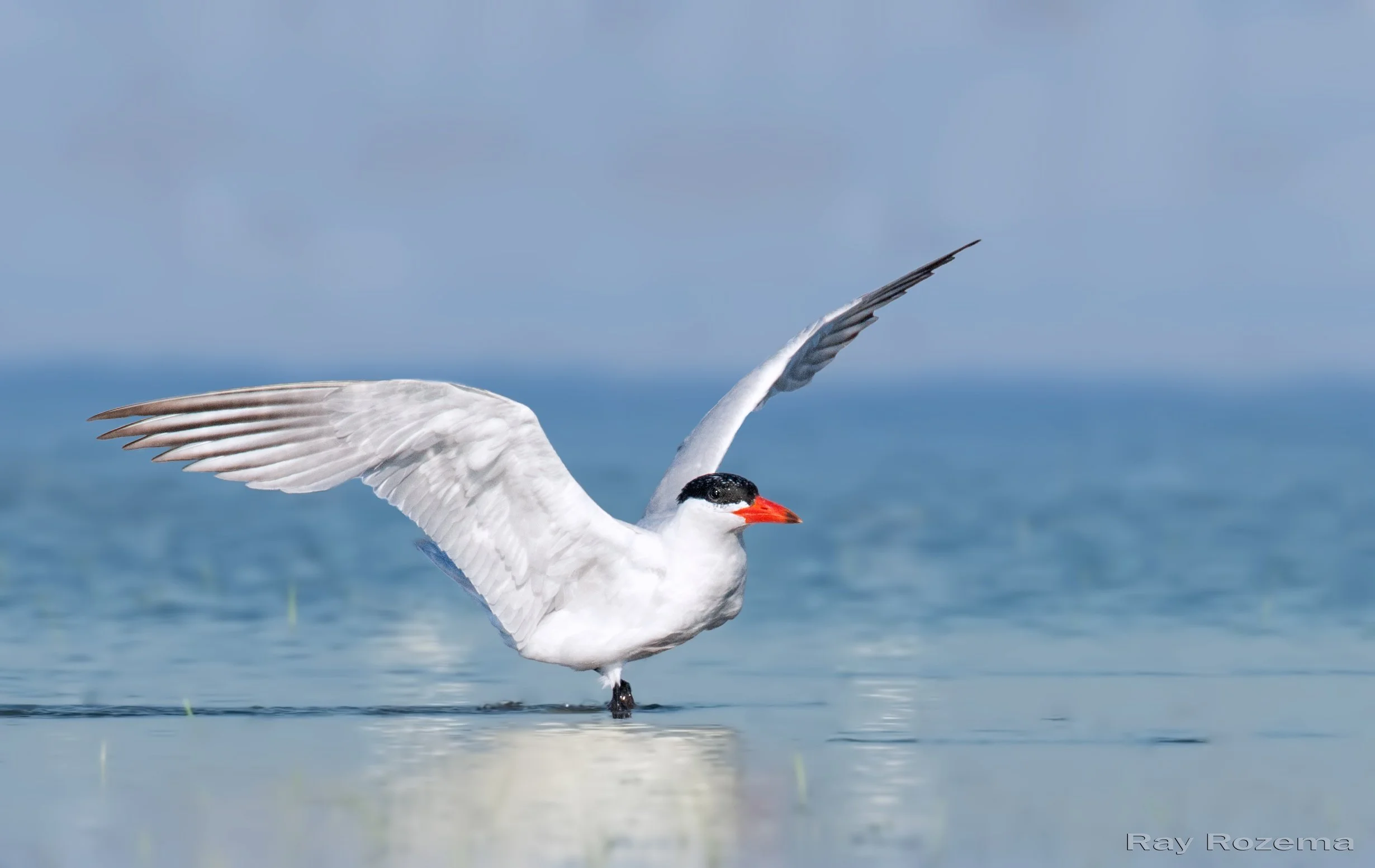
Caspian Tern © Ray Rozema
Garcia Bend Park is worth a visit in spring and fall to look for migrating landbirds in the riparian growth and Caspian or Forster’s Terns over the river. In winter, check for waterbirds you may have missed at Greenhaven Lake (described above) or River Lake (access via West Shore and East Shore drives north of Pocket Road). Marriott Park has large valley oaks that attract migrating warblers, vireos, tanagers and others in spring. eBird Sightings - Garcia Bend Park, Marriott Park
Directions to Garcia Bend Park: From the Greenhaven Lake, continue south on Riverside Boulevard, which turns into Pocket Road. Garcia Bend Park will be on your right opposite Windbridge Drive. To go directly to Garcia Bend, exit Interstate 5 at Pocket Road (6.0 miles south of Highway 50) and head west for 1.9 miles; the park will be on your left. For Marriott Park, from Pocket Road just west of Interstate 5, go south on Greenhaven Road for 0.2 mi, then turn left and drive 0.2 mi east on Grand River Drive to the park.
From Garcia Bend Park proceed to the next location on the tour, Chorley Park. From the intersection of Interstate 5 and Pocket Rd to the west and Meadowview Road to the east, drive 0.25 mi east on Meadowview Rd. Turn left and head north on Freeport Boulevard to Florin Road. Turn right and go east on Florin Rd to 20th Street. Turn left and drive north 1 block to the park. Walk west from the parking lot, behind the playing field and elementary school, to an area of weeds, willows and cottonwoods. Returning to Freeport Boulevard, continue north, back into southern Sacramento. You will pass Sacramento Executive Airport, which has a long history of harboring Burrowing Owl, though they have been much reduced and more sporadic in recent years. These birds may occasionally be seen along the drainage ditch between Freeport Boulevard and the airport, especially in the first few hours after sunrise and again a few hours before dark.
Chorley Park
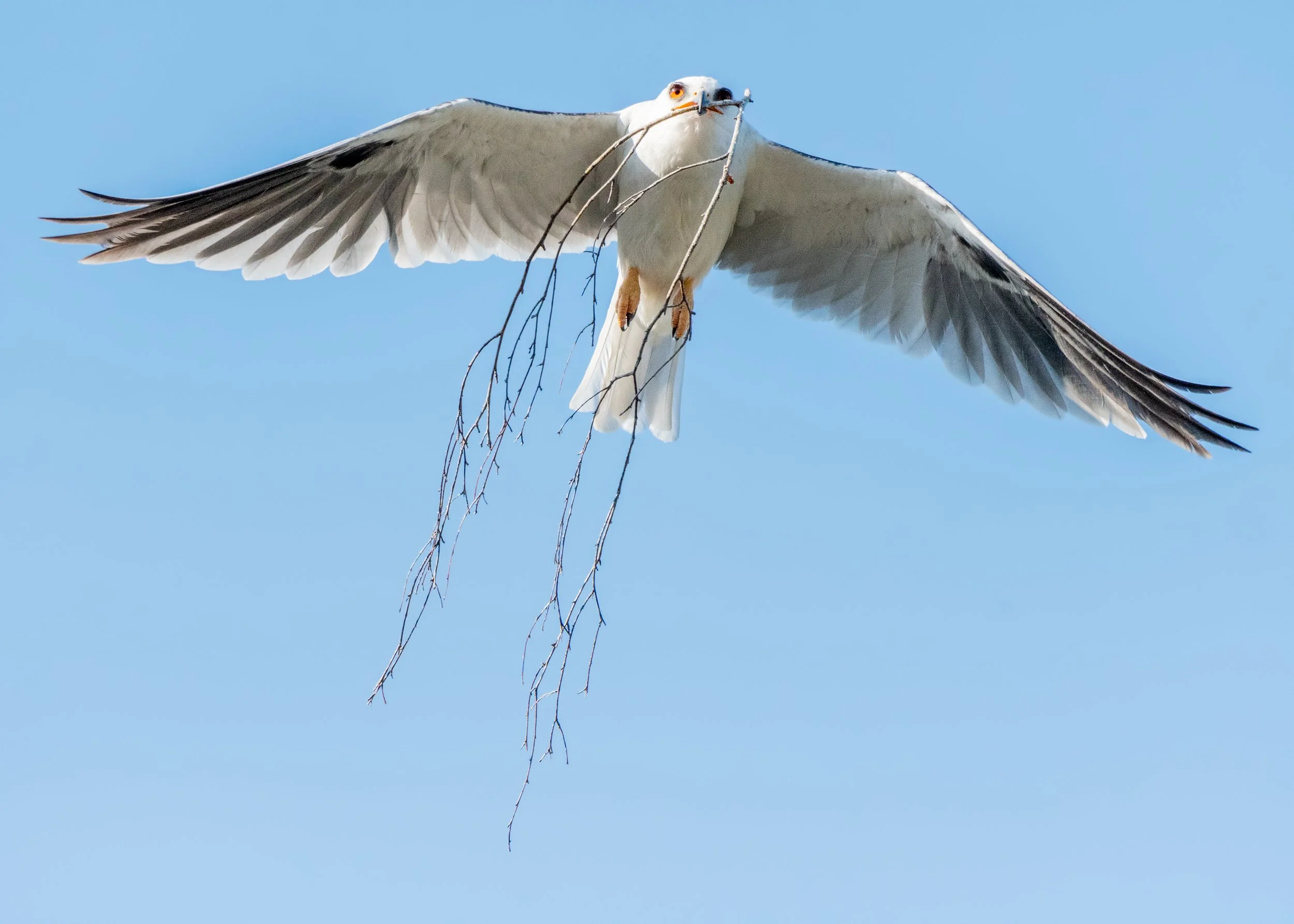
White-Tailed Kites have nested in Chorley Park © Daniel Lee Brown
Chorley Park is a small city park that harbors migrating land birds and nesting White-tailed Kite in spring. This area consists of weeds, willows, and cottonwood trees. eBird Sightings
Directions to Chorley Park: From the intersection of Interstate 5 and Pocket Rd to the west and Meadowview Road to the east, drive 0.25 mi east on Meadowview Rd. Turn left and head north on Freeport Boulevard to Florin Road. Turn right and go east on Florin Rd to 20th Street. Turn left and drive north 1 block to the park. Walk west from the parking lot, behind the playing field and elementary school, to an area of weeds, willows and cottonwoods. Returning to Freeport Boulevard, continue north, back into southern Sacramento. You will pass Sacramento Executive Airport, which has a long history of harboring Burrowing Owls, though they have been much reduced and more sporadic in recent years. These birds may occasionally be seen along the drainage ditch between Freeport Boulevard and the airport, especially in the first few hours after sunrise and again a few hours before dark.
Tim Manolis
Gibson Ranch Regional Park
The trail around the park is at its best during spring and fall migration with large numbers of sparrows, warblers, and kinglets in the canopy and on the ground.
Hansen Ranch Park Preserve
If you have never been to Hansen Ranch, you are in for a treat. A leisurely walk on the levee above the pond shows the preserve's many unique qualities. In addition to heron and egret rookeries in the spring, year-round grassland species, and a variety of waterfowl and hawks in the winter, this is excellent habitat for rails which can be heard regularly as you walk along the marsh.
The Walter S. Ueda Parkway (aka Wolf Ranch Wildlife Sanctuary)
Wolf Ranch has seen a significant increase in bird species and diversity over the years, increasing from 58 species recorded in 2001 to 139 species reported in eBird as of April 2024. The creek is host to egrets, heron, and other wading birds and shorebirds. The restored wetlands in the winter host a variety of waterfowl. Throughout hawks, kestrel and shrike have been known to dot the telephone poles and fence posts.
Tanzanite Community Park
Tanzanite Park is a good place for a leisurely walk where a wide variety of grassland species are possible. In winter, several species of raptors, including falcons, may also be observed along with herons, egrets, waterfowl, and shorebirds.
North Natomas
Because of its varied habitat, a large variety of birds may be seen in North Natomas. Hawks and blackbirds inhabit the grasslands. In the right season shorebirds, ducks, geese, and swans fill the rice fields. Riparian areas are rife with titmice and woodpeckers year-round and migrant warblers in spring and fall.
Stone Lakes Wildlife Refuge
Located within the Stone Lakes Wildlife Refuge is Blue Heron Trails. This trail system is fully accessible to all people and offers a well designed and paved trail, consisting of a mile loop around managed wetlands. The location hosts various migrants such as hawks, shorebirds, Sandhill Crane, and waterfowl.
Sacramento Regional County Sanitation District Bufferlands
The Bufferlands is an island of open space between South Sacramento and Elk Grove. Currently there is no unguided public access, but information on the numerous public tours can be found on the Bufferlands Event Calendar. Bird-focused tours are also offered on occasion with the Sacramento Audubon Society, check out our Calendar of Events for upcoming tours.