By-Law Amendment

We held a vote at our May General Meeting to amend our by-laws to allow both online and mail-in voting. Prior to this amendment our by-laws required that any amendments be voted on by those present at our General Meeting, and did not allow for either online or mail-in voting. Legitimate concerns have been raised that these restrictions effectively exclude those members who could not physically attend a General Meeting to cast their vote. Per our by-laws a 2/3 (67%) in-favor vote is required for any amendments. A total of 21 ballots were cast, with 20 approving the changes, and one not approving. Therefore the proposed amendments passed.

—Paul Miller, Sacramento Audubon Society President

Congrats Mackenzie!

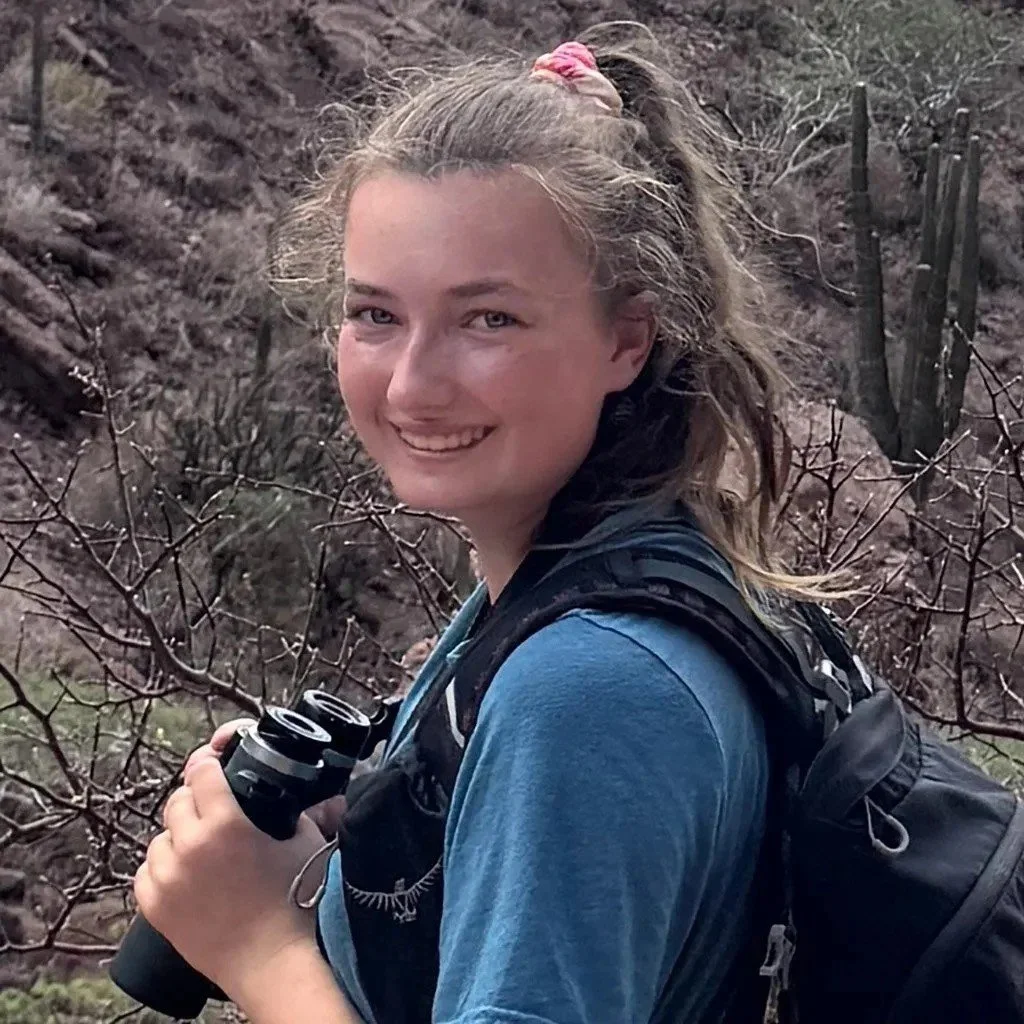
Congratulations to SAS Student Board Member, Mackenzie Hollander, named one of the American Birding Associations 2026 Young Birder of the Year. In addition to serving on the Sacramento Audubon Society board, Makenzie founded and leads the Sacramento Valley Young Birders Club, serves on the Central Valley Bird Club symposium committee, and is instrumental in supporting local conservation issues.

Sacramento Audubon Name Change Vote

Name Change Voting - May 23 through May 31

In March of 2023, despite increasing evidence that John James Audubon was both a slave holder and racist, the National Audubon Society Board of Directors voted against changing the organization’s name to something that did not include the name Audubon. Since 2023, nearly one third of all the 500+ local Audubon organizations, along with college chapters, have changed their name. The most common name change has been to use “Bird Alliance”, instead of “Audubon Society”.

Since April of 2023, the Sacramento Audubon Society Board has been actively involved with evaluating the need for a name change. We have published articles in The Observer and conducted a survey of our members that indicated the majority were in favor of a name change. 

About a year ago, the Sacramento Audubon Board decided to pursue a membership vote on a name change and chose the name Sacramento Bird Alliance should the membership approve a name change. Our first step was to update our by-laws to allow electronic voting. This has been completed, and we are now ready to put it before the membership for a vote. 

Voting will be conducted using a professional online voting website and will take place May 23-31. If you are member and have an email address with us, you will receive an email with directions on how to vote. For our members who do not use the internet we will be sending out a hard copy ballot to the address with have on file with a return envelope.

This is a very important vote, and we would greatly appreciate you taking the time to cast your ballot. We are committed to our mission of bird conservation and believe the organization’s name can either foster or hinder the organization’s ability to achieve its mission.

If you are not currently a member of the Sacramento Audubon Society you will need to join in order to vote. Once you join you will receive a separate email with directions. Paying dues (donation) to the National Audubon Society does not automatically make you a member of the Sacramento Audubon Society. You can become a member by visiting our website  https://www.sacramentoaudubon.org/join-renew-donate

If you have any questions or concerns about this vote, please reach out to me directly at sacaudubonconservation@gmail.com

Thank you for your commitment to bird conservation!

Cliff Feldheim
Fish and Wildlife Biologist
Conservation Chair
Sacramento Audubon

2026 - 2027 Sacramento Audubon Society Board Election - Voting Open

Voting on the slate of officers and directors for the Sacramento Audubon Society for the 2026 - 2027 fiscal year opens May 21, 2026 and closes June 20, 2026. You can cast your vote in one of two ways: either by voting online or by sending in a mail-in ballot. The online ballot will be available here on May 21, 2026. The mail-in ballot can be found in the May and June issues of The Observer. The link to vote online will also be emailed to members. As per the SAS bylaws, one must be a dues-paying SAS member in order to vote.

Nominated Board Officers and Directors for 2026-2027

President: Cliff Feldheim
Vice President: OPEN
Treasurer: Eric Johnson
Recording Secretary: Carla Resnick
Corresponding Secretary: Nancy Gronert
Director: Nicole Barden
Director: Taylor Florence
Director: Katie Wong
Student Board Member: Mackenzie Hollender

Field Trip Findings for April 16 - May 15, 2026

SAS Field Trip: Early Spring at the Bufferlands, 04/18/2026

Leader Chris Conard reported: We couldn't have asked for nicer weather during a break between periods of high wind, followed by rain in the forecast. It was a really enjoyable trip, although the hoped for migrant songbirds failed to materialize. There were a lot of Greater White-fronted Geese on the move. We had a smattering of other waterfowl, including Wood Ducks, a Cinnamon Teal, Northern Shovelers, Gadwall, and American Wigeon. Two Black-chinned Hummingbirds proved to be a rather late first-of-season for the property. Shorebirds weren't abundant, but we saw Black-necked Stilts, including one on a nest, a Semipalmated Plover, a flyby Hudsonian Whimbrel, a single Long-billed Dowitcher, a Spotted Sandpiper, and good studies of Least and Western Sandpipers. Double-crested Cormorants and Great Blue Herons were on nests, and a Western Cattle Egret was on a cow. Two pairs of Swainson's Hawks were at partially constructed nests, and a Red-tailed Hawk was incubating on a nest. Other highlights included two American Barn Owls, nice scope views of an Ash-throated Flycatcher, a Loggerhead Shrike, Tree, Barn, and Cliff Swallows, a singing Wrentit, a House Wren going into a nest box full of sticks, and a Hermit Thrush. https://ebird.org/checklist/S323712504


SAS Field Trip: Putah Creek Riparian Preserve, 04/19/2026

Leader Sonja Sorbo reported: A lovely sunny calm spring day set the stage for seven birders to explore the avian life at Putah Creek Riparian Preserve. This is a time of transition, where overwintering birds are leaving for the coast, higher elevations, or points south. Meanwhile, summer nesters and migrants begin to arrive like old friends, visiting us for a few short months before heading back to their other “home bases”.

While organizing ourselves by the parked vehicles, we noted several Yellow-billed Magpie hopping around the nearby open field. A Red-tailed Hawk had been on the ground unnoticed by us until it burst up into the air and landed on a wooden post. Several Western Bluebird perched on a fence only a few yards away, giving us great photo ops.

Our first few yards of hiking on the trail yielded views of a gorgeous male Wood Duck foraging near the opposite creek bank. Above him, the sun cast soft morning light on a resting Red-shouldered Hawk. We were practically inundated with House Wren calling all over the place; we finally heard a couple of Bewick’s Wren near our turn-around point.

Flycatchers were well represented — we studied a couple of Ash-throated Flycatcher who actually perched in the open for a few minutes each. Their Western Kingbird cousins amused us with their chattering; they lived up to their reputation for being little tyrants as they chased away some American Crows and a Sharp-shinned Hawk. They ignored the dozen Tree Swallow circling over the canopy. A Western Flycatcher and three Black Phoebe rounded out the flycatcher family.

Speaking of canopy, we were dazzled with a prolonged view of a male Black-throated Gray Warbler in breeding plumage. That same tree hosted a Bullock’s Oriole duo. We heard a Wilson’s Warbler and Western Tanager but couldn’t get eyes on them.

While observing a pair of California Quail scurrying in the underbrush, we were startled by a Cooper’s Hawk exploding onto a tree branch above, carrying some hapless creature in its beak.

Some of the winter holdovers showed up including White-crowned Sparrow, Cedar Waxwing, and Yellow-rumped Warbler.

Our year-round residents deserve mention — among them were noted Acorn, Nuttall’s, and Downy Woodpecker, Bushtit, White-breasted Nuthatch, California and Spotted Towhee. Total count for the morning was 43 species.


SAS Field Trip: Beginning Birder Walk, William Pond Park, 04/19/2026

Leader Larry Hickey reported: Nine beginning birders gathered on a beautiful spring morning at the William Pond part of the American River Parkway for a morning birding trip. We were able to observe Yellow-billed Magpies engaging with their nest right at the parking lot and may have been already feeding young. Tree Swallows were abundant all morning along with Northern Rough-winged Swallows flying over an island in the open water. A few Great Blue Herons were seen on their nests and one of our observant beginning birders noticed a Pied-billed Grebe on a nest not far from the shore. We were surprised to see a flock of Tricolored Blackbirds fly overhead. Highlights were a pair of Wood Ducks in the river and good views of our returning spring and summer nesters including Ash-throated Flycatchers, Western Kingbirds and noisy Bullock’s Orioles.  


SAS Field Trip: Lake Solano County Park, 04/21/2026

Leaders Nancy Gronert and Amy McDonald reported: One adventurous birder showed up for the field trip to Lake Solano Park with continuing rain predicted. We found the expected birds at the bridge, no rain, and then were disappointed when a ranger walked up to say Lake Solano Park was closed, no notice. Luckily lots of habitat in the area so we headed to the Fishing Access points towards the Lake Berryessa dam lot. This was a great trip to focus on ear birding with so many Spotted Towhees, Oak Titmouse, and woodpeckers singing and calling out along Putah Creek. The next focus was differentiating the many swallows in the air: Tree Swallows, Northern Rough-winged Swallows, and Cliff Swallows nesting under the bridges. At the base of Berryessa dam we were greeted by the newcomers of a pair of Bullock's Orioles and Black-headed Grosbeaks calling as well as a Vaux Swift flying overhead with the numerous Tree and Cliff Swallows. Rain did not start up until 10 am.


SAS Field Trip: Knickerbocker Creek – Auburn State Recreation Area, 04/26/2026

Leader Timothy Jackson reported: Three people showed up on a wet and soggy morning for birding at Auburn State Recreation Area. Shoes and pant legs got soaked due to rain and lots of wet grass (not to mention the mud). The creeks were running full, so the field trip was shortened due to difficulties with crossings. Despite the weather-related challenges, the group managed to tally 41 species including Western Wood-Pewee, Gray Flycatcher, and Wilson's Warbler. The eBird checklist can be found at https://ebird.org/checklist/S327956098.


Young Birders Club Field Trip: Rollingwood Bluffs, 04/26/2026

Leader Mackenzie Hollender reported: Nine young birders and 4 parents met my father and I on this overcast, drizzly day at the Rollingwood Bluffs anticipating the adventures peak spring migration would bring. In the blue oaks along snowberry way, we quickly picked up a California Towhee pair on a log, Acorn Woodpecker, Northern Mockingbird, and our first neotropical migrant of the day, an Ash-throated Flycatcher high in the oak. A Bewick’s Wren sang from a tangle feet from us, and a pair of Western Warbling Vireos, our second migrant of the day, followed us through the blue oak canopy.

Breaking into the open section that leads down to the ravine, we watched a pair of Hooded Oriole chase each other around a palm tree, and then the brilliant orange male landed at the top of an oak, providing great looks. We headed up to the top of the hill, and as we were waiting for more migrants, a huge adult Bald Eagle landed in its nest in a canyon side Gray Pine yards from us, providing rare incredible looks at the majestic bird that we all got to enjoy. When we thought our eagle encounter couldn’t get any better, its mate landed in the nest beside it, and they called to each other. A squirrel was climbing around where the nest sat in the pine, and we watched the eagles carefully watch the squirrel, noting that one even flew down to a perch to get a better look. While we were watching the eagle, another club member spotted an adult male Lazuli Bunting at the top of the blue oak!

We headed down the slope towards the edge of the ravine, picking up Golden-crowned Sparrow, California Quail, flyover Osprey, and White-breasted Nuthatch. Walking along the ravine, we heard then saw a beautiful male Cassin’s Vireo in the mossy oaks, noting its blueish head, yellow green body, prominent white lores, and cheery song. A Wilson’s Warbler foraged in the understory below, providing good looks as well. We continued into the ravine, hearing Orange-crowned Warbler, Black-headed Grosbeak, and seeing Spotted Towhee.

We crossed the bridge, and immediately after emerging into the blue oak woods we spotted our first Empid! A gray-dusty brown bird flicking its wings and tail upward, with a thick eye ring that lacked the Western’s teardrop shape, and primaries that projected beyond the rump. We used these clues to determine the bird as a Hammond’s Flycatcher! The bird foraged low to the ground until it was chased away by another Empid. We followed the song and calls of Western Flycatchers along the ravine, when looking upslope to the open blue oak, we suddenly had a flurry of Empid action! 2-3 Empids were in view foraging on low twigs and vegetation, including the Hammond’s and two others we got too brief looks at to determine ID.

We headed up the slope and wandered to the top of the oak forest, stopping in our tracks when we heard subtle “whit” calls of a Gray Flycatcher! We headed swiftly in its direction, and spotted the bird perched on a low twig near the base of a blue oak trunk. We immediately noticed its classic diagnostic tail-dipping motion, paired with a soft toned gray-brown plumage, with a subtle yellow wash on the belly. We spent a couple minutes watching the special bird as it foraged exclusively in very low spots before it flew out of our sight. What an amazing day we had! We headed back incredibly satisfied with a successful day of finding migrants both common and rare!


SAS Field Trip: Meiss Road Evening Trip, 04/30/2026

Leader Chris Conard reported: The stars of the show, the Lesser Nighthawks, did not disappoint. We saw about 10, starting with one flying over us in full sun. Many were foraging and calling at sunset over the pond three miles from Dillard Rd. Songbird activity was a little slower/quieter than expected. We had good views of Horned Larks, a couple Western Meadowlarks carrying food to unseen nestlings, and a flock of Tricolored Blackbirds. We also had a flyby male American Kestrel carrying a rodent. Some of the participants were still with me when I pulled a kingsnake off of Dillard Rd before it got squished. It thanked me by "musking" me with a white liquid--a smelly capper to the evening.


SAS Field Trip: Prairie City SVRA Bird Walk, 04/30/2026

Leader Rich Howard reported: A new trip co-sponsored by State Parks and Sacramento Audubon took us into Zone 5 of the Prairie City State Vehicle Recreation Area (SVRA) This area is normally closed to all visitors. We were accompanied by Joleen Ossello, the interpreter/outreach specialist for this park. McKenzie Boring, Natural Resource Manager, joined us and pointed out Red-tailed Hawk, Swainson’s Hawk, and Killdeer nests, not to mention a beautiful Alligator Lizard! We later saw all three birds; the Swainson’s carried a snake to the top of a pole and ate it. McKenzie also pointed out a distant blackberry bramble that hosts a Tricolored Blackbird colony, though we did not see them on this visit. Summer visitors put on a good show, with Ash-throated Flycatchers, Bullock’s Orioles, Western Tanagers, Western Kingbirds, Black-headed Grosbeak, and Lazuli Bunting. Lingering winter visitors included a flock of Cedar Waxwings, a lone Yellow-rumped Warbler, and a singing Golden-crowned Sparrow. A male Rufous Hummingbird on its journey north joined two Anna’s Hummingbirds feeding at a bottlebrush. Oak woodland residents were represented by Oak Titmouse, White-breasted Nuthatch, California Quail, and Nuttall's and Acorn Woodpeckers, Phainopepla are always great to see; we had one male seen by all. Our grand finale was a vigorously singing Lark Sparrow in the open. We had three participants and found 44 species in 2.5 hours on a level walk of just over a mile. Joleen has invited us to have another trip in the Fall, so keep your eyes open for that future opportunity to visit this interesting, rarely birded area. Our eBird list can be seen here: https://ebird.org/atlascalifornia/checklist/S329959868


SAS Field Trip: River Bend Park, 05/02/2026

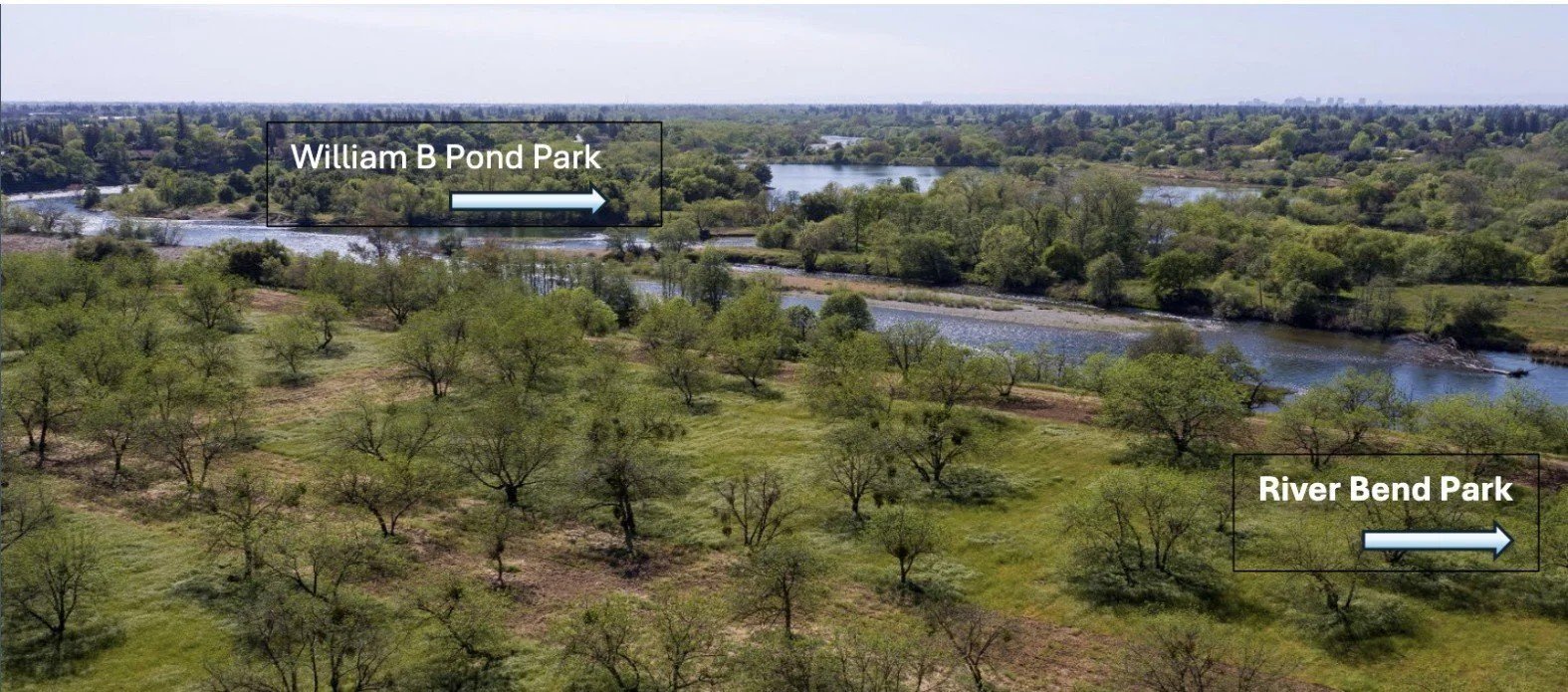
Leader Dana Miller-Blair reported: On May 2, A group of 15 of us met at River Bend Park near the boat launch area. The weather was cool, cloudy and a bit windy. We had a scope and a couple of photographers along to document some of our 36 species.

Near the bicycle bridge, we enjoyed good views of a perched Red-tailed Hawk, Western Bluebirds, Wood Ducks, a Mallard, Common Mergansers, Killdeer, many Acorn Woodpeckers and European Starlings, California Scrub-Jays, Cliff Swallows and Tree Swallows, a Mourning Dove, and Canada Geese.

After leaving the bridge we wandered through the woods enjoying the songs of Northern House Wrens, Bewick's Wrens, Oak Titmouse, Spotted Towhee, California Quail, White-breasted Nuthatches, House Finches, and the calls of Nuttall's Woodpecker, Ash-throated Flycatcher, Northern Flickers and Red-shouldered Hawks. We listened to a Wilson’s Warbler but could not see it through the thick vegetation. We had glimpses of Cedar Waxwing flocks, Bushtit flocks, and a Lesser Goldfinch.

We returned walking along the river, and heard Brown-headed Cowbirds, saw a European Starling nest, and listened to Song Sparrows. We caught a glimpse of a Yellow-billed Magpie as it flew over and heard a couple of American Crows.


SAS Field Trip: Searching for Empidonax Flycatchers, 05/03/2026

Leader Kevin Thomas reported: April was a fantastic month for Empidonax flycatchers in the Sacramento area. Six participants joined me on this trip focused on trying to locate and work through identification of this tricky group of birds. We set out on an overcast morning with a light wind and were immediately greeted by calling Western Tanagers. We made our way down through the ravine and picked up Warbling Vireo and Orange-crowned Warbler, the latter breeds at this location in some years. The morning activity was slow, but we enjoyed good company and scenery as we walked along the bluffs. We took a stop at the newly made Bald Eagle nest that the pair have been working on since they lost their egg in another nest early in the year. The pair were copulating and adding sticks to the new nest. We bumped into a small flock of Bushtits that had a Cassin's and a few Western Warbling Vireos hanging out with it. We managed to get great looks at a singing Rufous-crowned Sparrow as well. Our only Empidonax came towards the very end when the group got glimpses of two different Western Flycatchers. We didn't get to spend time sorting through other Empidonax identification, but it was a great morning with good birders. 


SAS Field Trip: William B. Pond Park, 05/03/2026

Leader Dan Williams reported: Thirteen of us had a lovely spring morning at one of my favorite parks on the planet. We started out along the river south from the bike bridge where we got nice scope views of a Spotted Sandpiper, a Belted Kingfisher, and Common Mergansers, as well as getting to enjoy some lingering Cedar Waxwings, cavity-exploring Tree Swallows and Northern House Wrens, an unseen singing Common Yellowthroat, and a single migrant Vaux's Swift overhead among the bike bridge colony Cliff Swallows.

A little further down the path, we explored the woods between the river and Arden Bar Pond where we were able to get gorgeous scope views of a blaze orange male Bullock's Oriole, as well as a Western Kingbird, and several Acorn Woodpeckers. From this location we were able to spot a couple of the Great Blue Herons and Great Egrets on nests at the rookery, though most of the nests were hidden in the new broad leaves.

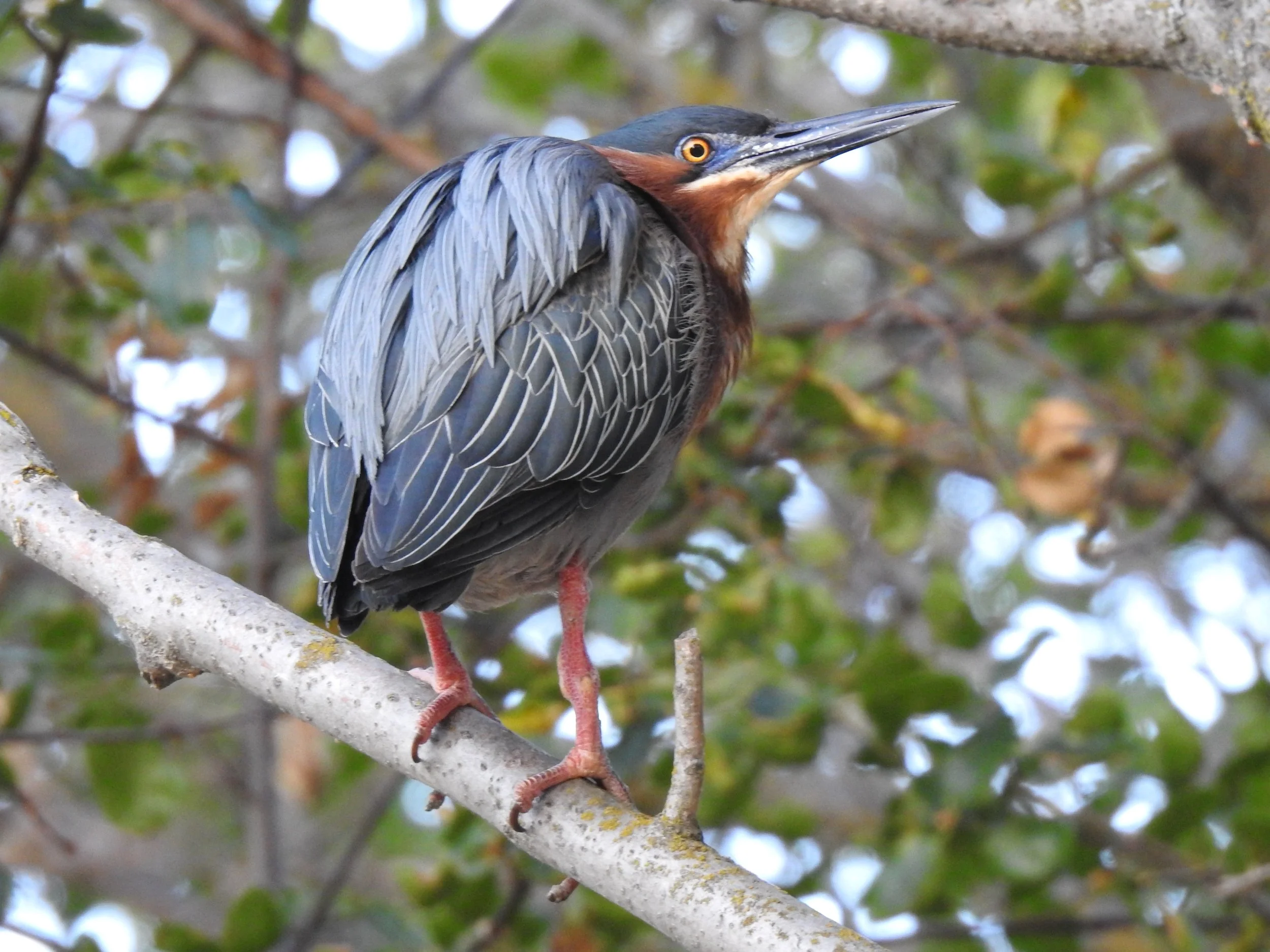
Arden Bar Pond was very productive with Canada Geese, Mallards, Wood Ducks, and Pied-billed Grebes all with new chicks in tow (one of the grebes fed its baby a crayfish which was very cool!), three Mute Swans (invasive but undeniably elegant), a fly-by Green Heron, a Red-shouldered Hawk on a wire, and a Swainson's Hawk teetering low over the cottonwoods.

We extended our walk west toward the Harrington Way access and were rewarded with good views of an Ash-throated Flycatcher, a territorially defensive Cooper's Hawk, an unfortunately unseen singing Western Warbling Vireo, more Wood Ducks with fresh ducklings, and a swim-by California Sea Lion.

All told we had 58 species on an entertaining half-day walk on our awesome Parkway.


SAS Field Trip: Sweetwater Creek, 05/06/2026 Trip Cancelled


SAS Field Trip: Bobelaine Audubon Sanctuary, 05/09/2026

Leader Maureen Geiger reported: Fourteen happy birders enjoyed 44 species at Bobelaine Sanctuary Preserve on this warm, clear morning. We walked to Ken Poerner's Overlook and back, and it was as always, lovely in the forest primeval. Just as we climbed the levee, a gorgeous male Bullock's Oriole perched close-by giving every one fine looks. Other greats were the Black-headed Grosbeaks seemingly singing everywhere all the time, lots of Ash-throated Flycatchers and Western Kingbirds, a Bald Eagle and funny, on-going drama among the Canada Geese on the Feather River sand bar seen at the Overlook. A very nice morning.


SAS Field Trip: Putah Creek Preserve – Family Friendly, 05/09/2026

Leader Ben Graber reported: We had a small but enthusiastic group of participants. At Putah Creek Preserve, we saw several Bullock's Orioles, a Yellow Warbler, a Wilson's Warbler, Cassin's Vireos, a Warbling Vireo, Western and Willow Flycatchers, and some great looks at a Western Tanager. 

After a well-earned lunch at Steady Eddy's in Winters, we headed for Lake Solano, where we saw two Phainopeplas, a Hammond's Flycatcher, several pairs of California Quail, Cedar Waxwings, and a raft of seemingly orphaned Common Merganser ducklings. The resident Indian Peafowl was displaying his feathers and successfully attempting to impress some people who were watching him from their picnic table. 

SAS Field Trip: Sweetwater Creek, 05/10/2026 Trip Cancelled

Thank You!

Thank You for Making Big Day Of Giving a Huge Success!

The Sacramento Audubon Society is grateful for your generous support during Big Day of Giving. Thank you to everyone who donated and shared our message. With your help we raised $7758.90. Your generous donation this year will help us fund Sacramento Audubon Society’s new scholarship program, thereby protecting birds by supporting those who study them.

—Sacramento Audubon Society BDOG Team

Name Change Voting - May 23 through May 31

About a year ago, the Sacramento Audubon Board decided to pursue a membership vote on a name change and chose the name Sacramento Bird Alliance should the membership approve a name change. Our first step was to update our by-laws to allow electronic voting. This has been completed, and we are now ready to put it before the membership for a vote. 

For reference, in March of 2023, despite increasing evidence that John James Audubon was both a slave holder and racist, the National Audubon Society Board of Directors voted against changing the organization’s name to something that did not include the name Audubon. Since April of 2023, the Sacramento Audubon Society Board has been actively involved with evaluating the need for a name change. We have published articles in the Observer and conducted a survey of our members that indicated the majority were in favor of a name change. 

Since 2023, nearly one third of all the 500+ local Audubon organizations, along with college chapters, have changed their name. The most common name change has been to use “Bird Alliance”, instead of “Audubon Society”. Name recognition is very important, and we feel using this will best achieve our mission.

Voting will be conducted using a professional online voting website and will take place May 23-31. You will receive an email with directions on how to vote. For our members who do not use the internet we will be sending out a hard copy ballot with a return envelope.

This is a very important vote, and we would greatly appreciate you taking the time to cast your ballot. We are committed to our mission of bird conservation and believe the organization’s name can either foster or hinder the organization’s ability to achieve its mission.

If you are not currently a member of the Sacramento Audubon Society you will need to join in order to vote. Once you join you will receive a separate email with directions. Paying dues (donation) to the National Audubon Society does not automatically make you a member of the Sacramento Audubon Society. You can become a member by visiting our website here: https://www.sacramentoaudubon.org/join-renew-donate

If you have any questions or concerns about this vote, please reach out to me directly at sacaudubonconservation@gmail.com.

- Cliff Feldheim

Name Change Online Voting Information

Current members with email addresses will receive an email from ElectionBuddy Elections. In the email will be a link to the ballot where members will vote either yes or no on the following question: “Do you support changing the organization’s name from “Sacramento Audubon Society” to “Sacramento Bird Alliance”? Voting will be open May 23 through May 31. You may only vote once.

The California Bird Atlas Needs You!

The California Bird Atlas (CBA) is in the first spring of what is sure to be the most comprehensive documentation of bird distribution and behavior ever attempted in the state (ebird.org/atlascalifornia) and Sacramento Audubon Society is a founding partner. Running year-round for five years, this project will serve as an essential conservation baseline for decades to come. It is the first state-wide effort for California, though other states and many counties have run similar projects. If you are already using eBird, you are just a few steps from contributing to the Atlas.

Atlasing is not that different from regular eBirding. It runs through the eBird app and/or eBird website. There is no official time commitment, and it just involves noting and entering breeding codes on your checklists with the built in tools. Atlasing is a fun way to learn and engage with your local birds. A Western Meadowlark on a fence holding a grasshopper in its bill and waiting for you to pass so it can feed its young is an example of breeding confirmation--these discoveries can make your day! Atlasing can also be an incentive to check under-visited areas and learn more about your neighborhood or region. 

There are over 3,000 atlasers already entering data into California's 16,527 blocks—roughly 3 x 3 miles. The CBA was carefully planned and is scientifically grounded. The core team worked with eBird to develop custom tools to make sure the data go in the right blocks. If you're already atlasing, please encourage your friends. Some folks are afraid to start because they don't want to make mistakes. Please don't let that be a hurdle. This is a five-year project, and we benefit from getting all active eBirders to contribute and learn in the process. If you don’t use eBird, this is a great time to start: The Quick Start Guide, Breeding Code Definitions, and FAQs (frequently asked questions). As a Regional Coordinator, I'm here to help in any way I can. Email me.

-Chris Conard

May 2026 Monthly Meeting and Speaker Presentation

Join us on May 21, 2026 at 7pm for The Art of Avian Imagery presented by Michele McCormick. This meeting will be held in-person at Effie Yeaw Nature Center and online via Zoom (hybrid meeting). Registration is no longer required to attend via Zoom.

About the Presentation

This presentation will discuss avian photography with an emphasis on the qualities and elements that take an image beyond "photo of record", documentation and portraiture into a more artistic realm.

About Our Presenter

Michele McCormick is a Sacramento photographer whose work has focused on avian imagery for several years. Her images have been awarded first place in the annual KVIE art auction photography category twice, and recognized among the top 100 images in Audubon's national competition and the top 250 in the North American Nature Photographer's Association.

Attend the Meeting and Presentation

This meeting will be a hybrid session. Participants can join the meeting on-site at Effie Yeaw Nature Center or from the comfort of their home via Zoom.

Attend the Meeting in Person
Michele will give her presentation live at Effie Yeaw Nature Center. Registration is not necessary to attend the meeting at Effie Yeaw Nature Center.

 Effie Yeaw Nature Center
2850 San Lorenzo Way
Carmichael, CA 95608

Attend the Meeting Online via Zoom
The presentation will be streamed in real time on ZOOM from Effie Yeaw Nature Center. To attend the meeting via Zoom use the link below then enter the passcode.

Zoom Link for May Meeting: https://us06web.zoom.us/j/86319585816?pwd=DPTrbbY3ItkoVdS8ui72WzmmWSmGsH.1
Passcode: 579758

You do not need a ZOOM account to join the meeting. The Zoom portion of our meeting is limited to 100 participants. Participants will be admitted on a first come, first serve basis.

Field Trip Findings for March 12th - April 15th, 2026

SAS Field Trip: Reichmuth Park, 03/13/2026

Leader Eric Johnson reported: It started out slow and then picked up for the nine intrepid birders on a temperate March morning. We had a huge flyover of Snow Goose, and amidst the white there were five dark undersides indicating Greater White-fronted Goose. A declaration of "Everyone see that Ross's Goose?" was met with laughter. Wood Duck and Mallard were dawdling at the end of the trough, so we let them be. Sauntering up the single-track, we found the usual Reichmuth suspects: White-breasted Nuthatch, Nuttall's Woodpecker, Black Phoebe and the like. Northern House Wren were singing their little hearts out, and Ruby-crowned Kinglets chattered away gaily. We turned around at the park/wood interface, and back near the start we had the resident Fox Sparrow make its appearance, along with a surprise Lincoln's Sparrow. A total of 29 species pre-migration made this a very successful morning!


SAS Field Trip: Unusual Parts of the Cosumnes River, 03/14/2026

Leader Rodd Kelsey reported: On our late winter visit to Cosumnes River Preserve on March 14th, we had a great group of 14 people, some who had never been to the Preserve before. It was a beautiful, warm (maybe too warm!) morning. While it was still too early to see spring migrants and summer breeding species, we had a good contingent of wintering birds and residents, all getting ready for migration and the breeding season, including seeing Yellow-rumped Warblers now deep in molt and a few already in full breeding plumage regalia. It was also great to see American Avocets in breeding plumage, along with a young Bald Eagle wreaking havoc over wetlands along Desmond Rd in ways that made it look like it didn't really have a handle on this hunting waterfowl thing. We saw a total of 64 species across the River Walk and wetlands and from around Wood Duck Slough. The real highlight of the day was seeing the continuing Ruff - a lifer for many of us. All in all, a nice day.


SAS Field Trip: North Natomas Regional Park, 03/14/2026

Leader Ben Graber reported: We had near-perfect weather, and a very large and enthusiastic group. Special thanks to Mary Forrestal and Jane Van Kessel for volunteering to serve as co-leaders and scope monitors. We started off with dazzling looks at some Western Bluebirds and some Red-winged Blackbirds proudly displaying their namesake wing patches. Other songbirds included Lincoln's Sparrow, American Pipit, and an unusually cooperative Savannah Sparrow. Meanwhile, a Cooper's Hawk surveyed nearby bird feeders for an easy lunch. The biggest highlight, of course, was the rookery at the pond. There were countless Black-crowned Night Herons and Western Cattle Egrets, which amazingly outnumbered the Snowy Egrets. The trip concluded with a confrontation between an American Crow and a Red-shouldered Hawk. 


SAS Field Trip: Beginning Birder Walk, William Pond Park, 03/22/2026

Leader Larry Hickey reported: On a spectacular spring morning at William Pond 12 beginning birders joined us for a delightful morning of birding. We counted 46 species including a pair of Red-shouldered Hawks actively interacting with each other in the eucalyptus trees. Yellow-billed Magpies were active all morning, some clearly tending to and entering and exiting their large dome nests. We clearly saw and heard many of the expected species including European Starlings and Acorn Woodpeckers, and we encountered some of our wintering birds, like White-crowned and Golden-crowned Sparrows, but their numbers seemed to be smaller than last month indicating that many have already left for their nesting grounds. Many Tree Swallows were busy flying everywhere and Pied-billed Grebes appeared to be in breeding plumage. Great Blue Herons were seen, but surprisingly not on their nests in the rookery.  Highlights included Wood Ducks in the river and FOS (first of season) Western Kingbirds.


SAS Field Trip: Hidden Falls Regional Park, 03/24/2026

Leader Peter Perrine reported: Eight of us enjoyed a beautiful if unseasonably warm morning at Hidden Falls Regional Park. Right off the bat, two Wild Turkeys ambled by and Lark Sparrows gave all of us good looks near the parking lot. Acorn Woodpeckers were actively setting up for the breeding season, and soon we all saw two very accommodating Rufous-crowned Sparrows singing their lovely songs within ten feet of the trail and posing for photos. Hutton’s Vireos sang off-and-on throughout the morning, and one gave us all great looks to compare with nearby Ruby-crowned Kinglets. Orange-crowned Warblers sang repeatedly all morning and eventually showed themselves to everyone. At Coon Creek, we searched for but did not find the recently reported American Dipper and possible nesting Golden Eagles, but acrobatic displays by pairs of Northern Rough-winged Swallows was great entertainment. A flyover Sharp-shinned Hawk was well seen by all, providing excellent discussion of the subtle differences between it and Cooper’s Hawks. Later, a calling Cooper’s Hawk remained hidden, but two patient members of the group were rewarded to finally see it leaving its nest. All-in-all, a marvelous day birding, with a total of 33 species accounted for.  


SAS Field Trip: Sailor Bar, 03/28/2026

Leader Michael Curtis reported: Fourteen showed up for a cloudless, cool spring morning at Sailor Bar. We made our way to the pond, where we were greeted by the sounds of Red-winged Blackbirds, Bewick's Wrens, and an Oak Titmouse. There, we observed a Great Blue Heron and the Red-winged Blackbirds. As we moved along, a Green Heron flew behind us. We continued down the main trail and spotted a Northern Mockingbird, Red-tailed Hawk, and, of course, Acorn Woodpeckers, to name a few. Eventually, on the walk, some of us were able to see the Hooded Oriole, making two appearances on the trail before going into a Palm. As the walk continued, we noticed Yellow-rumped Warblers and Lesser Goldfinches moving about, and what appeared to be an agitated state. We waited patiently and eventually saw two Cooper’s Hawks in the area, with one of them landing in the oak tree we had been watching. We spent the last third of the trip following the river, where we saw Buffleheads, Common Goldeneyes, Spotted Sandpipers, and a Turkey Vulture enjoying a meal. Before heading back to the vehicles, we stopped by the rookery, where the Great Blue Herons stay. We counted 51 species on the day, with some of our spring and summer residents returning. It was a wonderful morning with many great people.


SAS Field Trip: Bucks Creek, 03/29/2026

Leader Maureen Geiger reported: Bucks Creek did not disappoint on this warm morning hike. With Tim Jackson taking care of eBird plus photography, 9 of us had a great morning with signs of spring everywhere. Best bird was a White-throated Sparrow seen well. We have found them on this trail in the past but always in the dead of winter. Close looks at a female Hooded Merganser were also satisfying. The ponds which once supported ducks, grebes, and herons, are now so vegetation choked that there is very little open water, so those numbers are way down - although it must be said that it was turtle heaven today! Here is the link to the eBird checklist with photos:  https://ebird.org/checklist/S314465727.


Young Birders Club Field Trip: Bobelaine Audubon Sanctuary, 04/04/2026

Leader Mackenzie Hollender reported: One young birder and one parent met my father and I at Bobelaine Audubon Sanctuary. In the parking lot, we noticed Western Bluebird, a Western Kingbird nesting in the telephone pole, and an Orange-crowned Warbler (OCWA). We headed down to the center trail, spotting another OCWA, and hearing many Yellow-rumped Warblers (YRWA) at the beginning of the trail. We heard and saw Spotted Towhee, Bewick’s Wren, and a Hutton’s Vireo on the center trail. Veering right to the otter trail, we made our way along a tall tangle of brambles where we noticed a third OCWA. While stopped at the warbler, we heard a buzzing noise characteristic of a Rufous Hummingbird. Just then, we saw it sipping from white flowers in the bramble! What a surprise! After the hummingbird zoomed away, we continued down the trail, scaring a flock of White-crowned Sparrows into low growing vegetation. Through a crack in the vegetation, we saw that one of the sparrows had a white throat and a supercilium that was white with yellow just above the eye. A White-throated Sparrow! It dashed away before we could get any more good looks. We took the north trail toward the feather river, noticing Northern House Wrens bringing sticks into nest boxes, Tree Swallows perching in high cottonwood branches, and hearing distant Wrentits. We arrived out on the river and watched a Western Grebe vigorously hunt in the river. A Great Blue Heron hunted stoically on the shore, and two Common Ravens sat on riverside snags. Turning back into the woods, we began to look through the tens of YRWA for a Black-throated Gray Warbler that had been seen earlier in the morning. We eventually found it moving through a tangle of branches in a valley oak. High in another valley oak, we saw a brilliant orange male Bullock’s Oriole giving a rattle call! We walked up to an outlet in the woods along the lake and watched a pair of Wood Ducks take flight. Cooper’s and Red-tailed Hawk, Wild Turkey, Downy Woodpecker, and Yellow-billed Magpie were also notable finds for the trip. We headed out of the woods thrilled with the variety of birds we got to see and hear! We ended the trip with seven lifers for the attendees.


SAS Field Trip: William Pond Park, 04/04/2026

Leader Mark Martucci reported: A large group of twenty people detected 68 species of birds on a very pleasant early spring morning along the American River Parkway. Highlights included Canvasback, Wilson's Snipe, Green Heron, White-tailed Kite, Bald Eagle, Swainson's Hawk, Western Kingbird, Phainopepla and Bullock's Oriole.

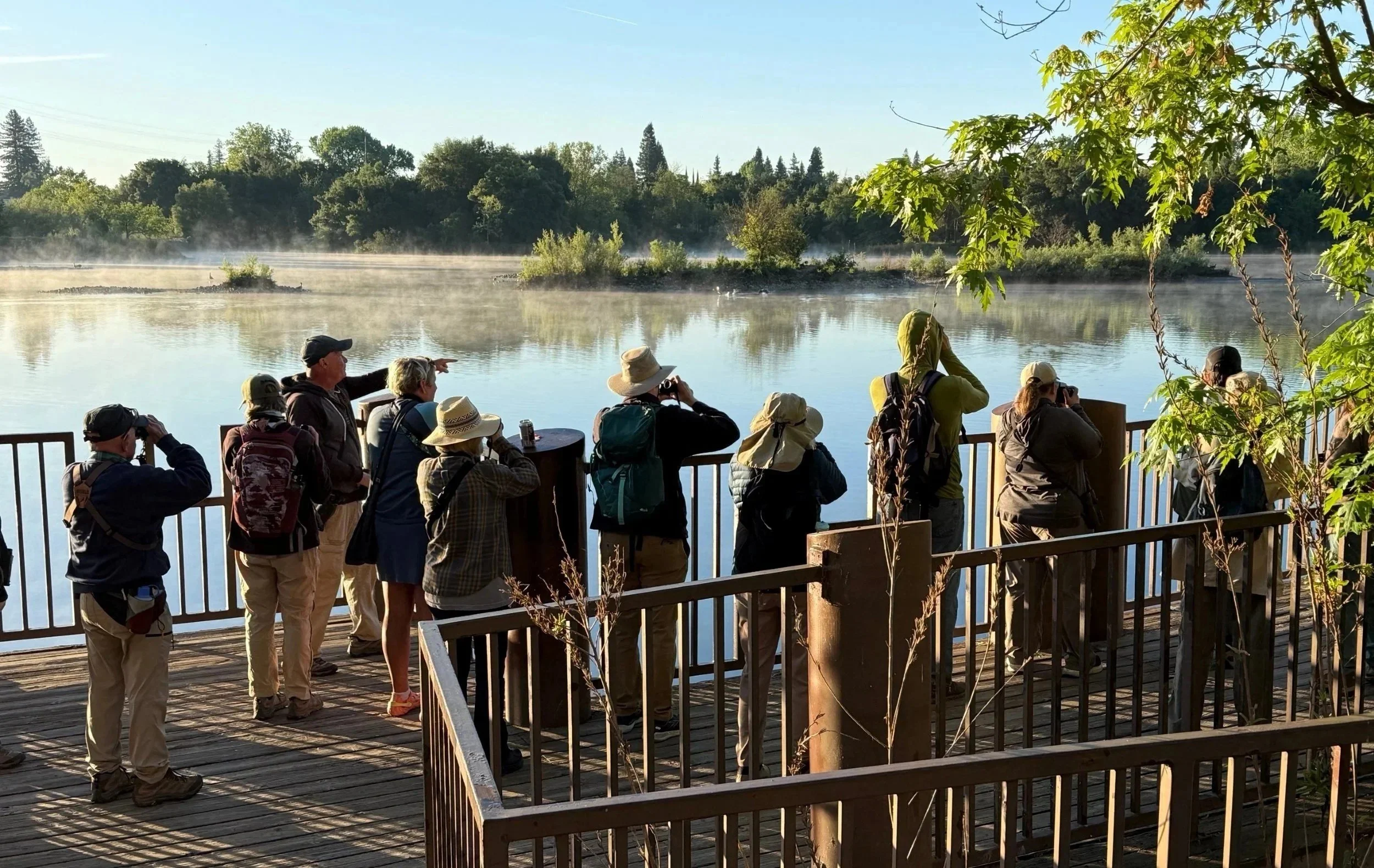
Birding William Pond with Mark Martucci © Rich Howard

SAS Field Trip: Spring Migration Hotspot, 04/05/2026

Leader Kevin Thomas reported: Eight participants showed up this Easter morning for a bird walk at Bushy Lake to look for early migrants. The morning started off with numerous House Finches singing away near the parking lot. As we made our way down to the river, we were treated to a pair of White-tailed Kite and American Kestrel hanging out together. We continued down the dirt path through the blackberry bushes and caught glimpses of our wintering sparrows before they leave to breed; Fox Sparrow was a highlight along with a Hermit Thrush. Spring was in the air as Tree Swallows jockeyed for nest cavities with Acorn Woodpeckers and European Starlings. The Yellow-rumped Warblers were singing away preparing for their movement to their breeding grounds. We came across our best early migrant in the willows along the river's edge, a Gray Flycatcher put on a show for us, splaying for food and showing its characteristic tail drop habit. It was a great spring morning with wonderful friends.  


SAS Field Trip: Phoenix Park & Middleridge Trail, 04/11/2026

Trip Cancelled


SAS Field Trip: Pine Hill/Kanaka Valley, 04/12/2026

Trip Cancelled

Sacramento Audubon Scholarship Program

The Sacramento Audubon Board is excited to announce the Sacramento Audubon Student Scholarship. The scholarship will award a student up to $1,500 a year for three academic years.

The Sacramento Audubon Student Scholarship is aimed at supporting any degree seeking student enrolled at an accredited 4-year college or university in the Sacramento Valley, who is dedicated to the study, conservation, and protection of birds and their habitats. Recognizing that we are in a new era of conservation, one that includes science but also more actively engages the public in conservation, this scholarship is not restricted to a specific field of study but instead is restricted to focus areas that align with Sacramento Audubon’s mission.

The mission of the Sacramento Audubon Society is to:

  • Promote the protection and scientific study of wild birds;

  • Foster the enjoyment and appreciation of wild birds through community outreach;

  • Encourage, support, and provide environmental educational opportunities;

  • Advocate for the conservation of open space and birds in the Sacramento region.

Applicants must meet the following requirements:

  • Be an active Sacramento Audubon Society member; “active” means that the candidate has a current membership to the Sacramento Audubon Society.

  • Be currently enrolled in a degree seeking program at an accredited 4-year college or university in the Sacramento Valley.

  • Be enrolled in coursework, research, or fieldwork directly related to ornithology, avian ecology, bird conservation, or related avian fields.

Examples include:

  • Conservation programs with a focus on ornithology, avian ecology, or bird conservation (biodiversity, endangered birds and their ecosystems, habitat restoration);

  • Environmental Planning with a focus on ornithology, avian ecology, or bird conservation;

  • Environmental Journalism with a focus on ornithology, avian ecology, or bird conservation;

  • Photography or Art with subjects to include bird and/or natural resource conservation;

In addition, in order to qualify for the Scholarship, the student must not have received any Sacramento Audubon Society funding within the last 3 years.

Students with fewer than three years left in their academic programs are encouraged to apply. However, awards will only be provided for years in which the candidate is enrolled in a degree seeking program at an accredited 4-year college or university within the Sacramento Valley. Funding is restricted to academic and academic-related expenses (e.g., tuition, academic fees, textbooks, materials, and living expenses incurred during the course of academic pursuits).

The application and reporting requirements will be posted to the Sacramento Audubon website by April 1.

—Cliff Feldheim

Name Change Update

In March of 2023, the National Audubon Board of Directors voted on changing the organization’s name to something that did not include the name Audubon. Despite increasing evidence that John James Audubon was both a slave holder and racist, as well as producing some questionable science (see the book, The Birds That Audubon Missed), National Audubon decided that the name Audubon was so tightly linked with successful conservation that changing the name would hurt the organization’s ability to achieve its mission, and they voted to keep the name.

Since 2023, nearly one third of all the 500+ local Audubon Community and College Chapters have changed their name. The most common name change includes “Bird Alliance.” The Sacramento Audubon Board of Directors has been discussing a name change since April 2023, publishing articles in The Observer and providing links on our webpage to inform our members about the status of a potential name change.

About a year ago, the Sacramento Audubon Board decided to pursue a name change and ultimately put it before the membership for a vote. The first step in that process included changing the bylaws to allow electronic voting as well as in person voting (this bylaw change was made in June 2025).

How could a name change, or lack of a name change, have an impact on the ability of Sacramento Audubon to achieve its mission?

The mission of Sacramento Audubon is to:

  • Promote the protection and scientific study of wild birds.

  • Foster the enjoyment and appreciation of wild birds through community outreach.

  • Encourage, support, and provide environmental educational opportunities.

  • Advocate for the conservation of open space in the Sacramento region.

Similar to National Audubon’s concern, the biggest impact from a name change could be the lack of organizational recognition, and include people not being able to contact us, and/or confusion as to why there is no longer a Sacramento Audubon. This could negatively impact all four aspects of the Sacramento Audubon mission. However, the impacts would likely be short term as people become more aware of the organization’s name change over time and with an active campaign to get that new name publicized.

Keeping the Audubon name could have a negative impact on the organization’s ability to achieve all four aspects of its mission. However, the organization’s ability to effectively conduct community outreach and education (as well as recruit new members and younger members) might be impacted the most. Whether one believes John James Audubon was a racist or not, or whether the topic is even important in today’s world, a simple google search asking that question “was John James Audubon a racist” provides a lot of information to support the view that he was both racist and actively involved in degenerating black people. While I know not everything one reads on the internet is true, it is likely that someone that has heard that Audubon may have been racist may take this action to learn more.

One could argue that the discussion of Audubon’s racist views distracts from our mission and may discourage someone from joining or supporting the organization. This may be especially true for young people. A name change to remove Audubon is also consistent with the American Ornithologists Union decision to remove people’s names from the names of birds.

If the membership approves a name change, the Board has approved using the name Sacramento Bird Alliance. In a society that is increasingly disconnected from nature, including the word Bird in the organization’s name could increasingly benefit the organization. Calling out the word Bird in the name identifies that we work with birds. Most of the Sacramento Audubon Board has experienced someone asking, “what’s an Audubon” after hearing our name, or saying “oh Audubon, you must be in to cars.”

The Sacramento Audubon Board recognizes that there are people on both sides of this issue that are very passionate about changing or keeping the name. While we recognize the societal and potentially political arguments about a name change, our focus is on our mission and how the name impacts our ability to best achieve our mission and serve our members. We would benefit from hearing your opinion on the name change, and most importantly the organization would benefit from your vote on the name change.

Please feel free to contact me directly at sacaudubonconservation@gmail.com about the name change, and look for information on our website and through email about when the name change voting opens and closes (coming in April).

—Cliff Feldheim, Conservation Chair

Field Trip Findings for February 14 - March 11, 2026

Woodland Wastewater Treatment Plant, Yolo County, 02/14/2026

Leader Mark Martucci reported: Thirteen people detected 63 species of birds on a calm overcast morning in Yolo County. Highlights included Canvasback, Lesser Scaup, Ring-necked Duck, Wilson's Snipe, Black-necked Stilt, Long-billed Dowitcher, Eared Grebe, Western Grebe, Northern Harrier, Say's Phoebe and Loggerhead Shrike.


Gray Lodge Wildlife Area, 02/15/2026

Leader Sonja Sorbo reported: The threat of an incoming storm didn’t deter seven of us from exploring Gray Lodge and observing 66 species. In fact, despite the ominous weather forecast, it was bright and sunny at the preserve.

The drive from the entrance to the parking lot was fruitful and gave us a Yellow-billed Magpie, several Western Meadowlark, a Say’s Phoebe, a Snowy Egret, and a flyover of Tundra Swan. Upon arrival at Parking Lot 14, we began studying the ducks that were milling around the adjacent ponds. Species we noted included Northern Pintail, American Wigeon, Bufflehead, Green-winged Teal, Northern Shoveler, Gadwall, and Mallard. Several Black-necked Stilt paced back and forth foraging for tasty snacks. Nearby trees hosted Red-winged Blackbird, Ruby-crowned Kinglet, California Scrub-Jay, Yellow-rumped Warbler, Northern Mockingbird, and Bushtit.

While walking to the next pond, we were surprised to see a River Otter crossing the trail ahead. As it entered the pond, it spooked a Green Heron, whose colors looked gorgeous in the morning sunlight. Nearby, a trio of Double-crested Cormorant perched on a log, busying themselves with catching rays. While trying to track down a singing House Wren, we stumbled onto a small group of Golden-crowned Sparrows, with one White-crowned in their midst. We found a Bewick’s Wren but never spotted the House Wren. In our defense, we were distracted by the appearance of a Downy Woodpecker and a minute later a Nuttall’s Woodpecker. Soon after, we heard the classic call of Sandhill Cranes; looking up, we were treated to a flyover of seven beauties.

The lookout deck provided nice views of Ring-necked Duck which we added to our waterfowl list. One of our birders spotted a Marsh Wren in full view a short distance away—it was a life bird for her! Another birder garnered a life bird when we noted 8 Common Gallinule in the canal below us.

The weather began to change as we began the Auto Loop tour, but bird activity remained good. We finally found Snow Geese and Greater White-fronted Geese amassed halfway through the drive. There were several hundred of each species, but not the thousands that have been seen in past years.

Toward the end of the drive, we were delighted to see a dozen California Quail scuttle across the road; they immediately melted into the brush.

Raptors included an American Kestrel, a Red-shouldered Hawk, and over half a dozen Red-tailed Hawk. Turkey Vultures were everywhere.

As we were completing the drive, the rain began — perfect timing!


Bodega Bay, 02/21/2026

Leader Dan Williams reported: Thirteen of us had an excellent late winter day at Bodega Bay. Conditions were overcast with moderate wind, but the rain held off and activity was high throughout the day.

We started off birding the beach, tide flats, and jetty at Doran Regional Park. On the beach there were numerous Willets and Marbled Godwits, one Hudsonian Whimbrel, and a nice variety of gulls. A Northern Harrier and an Osprey cruised by overhead.

On the tide flats were Snowy Plovers, Black-bellied Plovers, Dunlin, and Sanderlings, several Short-billed Gulls, a flock of Forster's Terns, as well as a few (but not nearly as many as most years) Brant.

There were lots of folks fishing on the jetty, so there were none of the usual rock-loving shorebirds there. However, the Campbell Cove channel more than made up for that, with Common and Red-throated Loons, Red-necked Grebes, Surf Scoters, Red-breasted Mergansers, and even a couple of Common Murres giving us great views (between their frequent dives). 

Next up at The Tides Wharf there was a nice mixed flock of Black and Ruddy Turnstones on the rocky spit behind the restaurant. Below the back deck we were able to get fun photos of an Eared and Horned Grebe swimming very closely together and of a very close basking pair of sea lions.

The hillslope below the Diekmann's Deli parking lot was as birdy as ever, with the stars of the show being a Tennessee and a Nashville Warbler that had been wintering there. There were also at least two Orange-crowned Warblers, Chestnut-backed Chickadees, and plenty of Anna's Hummingbirds zipping around among the flowering vines.

Following lunch at Campbell Cove Beach, we concluded our day atop Bodega Head where we finally found our Black Oystercatchers and Surfbirds that were absent from the jetty, as well as several Brandt's and Pelagic Cormorants in breeding plumage, and a Glaucous-winged Gull trying to swallow a sea star. All told, we had 75 species with lots of highlights. Another great edition of this always fun trip.


Beginning Birder Walk, William Pond Park, 02/22/2026

Leader Larry Hickey reported: Ten beginning birders joined us on a beautiful February morning for a field trip at the William Pond section of the American River Parkway.  A pair of Red-shouldered Hawks were cooperatively perched in the eucalyptus trees next to the parking lot and Yellow-billed Magpies were loud, active and tending to their nests. In the clear morning light, we were treated to excellent views of Acorn Woodpeckers, European Starlings and many Yellow-rumped Warblers. It looked like Bushtits were already beginning to pair off and work on their nests and we were delighted to hear a Ruby-crowned Kinglet singing. We had good looks at White-crowned and Golden-crowned Sparrows, good views of male and female Common Mergansers and we observed many Great Blue Herons on their nests at the rookery.  We were delighted to find a Canvasback duck in the open water. However, the biggest surprise of the day was a sea lion in the river spotted by some of our beginning birders.


Snipes-Pershing Ravine, 02/28/2026

Leader Lynne Attar reported: What a nice birding trip out to Snipes-Pershing Park in Folsom! The highlight was definitely spotting Bald Eagles. "Mama" in their nest, "Papa" busily flying in nesting materials with sticks clutched in his talons - always a thrill to see them in the wild. We also watched White-breasted Nuthatches busily arguing with Oak Titmice over a nesting hole, chattering back and forth like tiny neighbors in a dispute. Many other birds were in attendance, including a Yellow-billed Magpie, Orange-crowned Warblers, Golden-crowned Sparrows, Western Bluebirds and others which were active and singing. The weather was lovely, the birds were lively, and a truly enjoyable time was had by all!


Folsom Wetlands and Riparian Trails, 03/01/2026

Leader Chris Conard reported: Fifteen of us had a great time visiting two wetland parks in Folsom. Highlights included Wood Ducks, a foraging Hooded Merganser at close range, several quick views of Virginia Rails, and heard-only Soras. There was a lot of bird song and activity. Two Bushtit nests were nice to find, as was a male Phainopepla.


Sailor Bar, 03/07/2026

Leader Rich Howard reported: Eight folks showed up for a beautiful morning at Sailor Bar. The calendar said it was winter, but everything else felt like Spring. The winds of the previous days did not arrive until later, and the wildflowers were on full display. The spring mood was enhanced by hearing many bird songs, allowing comparison with the calls we have been hearing all winter. The boat launch lagoon provided an immediate surprise, as four female Hooded Mergansers cruised along the shore. Not long after, an adult Bald Eagle flew downstream; we saw it again (or another?) flying upstream later. The winter diving ducks were still present, with both male and female Bufflehead and Common Goldeneye allowing comparison views.

The river was low enough to host some sitting gulls on a gravel bar, and we picked out one Iceland Gull (Thayer’s) among the California and Ring-billed Gulls. Wood Ducks, Belted Kingfishers, Spotted Sandpiper, and white egrets (Snowy and Great) entertained us with their antics along the riverbanks, Great Blue Herons on nests were a special treat. Just before leaving the river to turn inland, we finally found a very cooperative female Phainopepla; she allowed scope views for all. A perched Northern Rough-winged Swallow was an unexpected surprise, while the Tree Swallows were a constant presence, chattering in the air and investigating nest holes in the cottonwood trees. The pond was strangely quiet, as we found no blackbirds. Walking back through the oak woodland, we got closer looks at Nuttall’s Woodpeckers, White-breasted Nuthatches, Oak Titmice, Bushtits, and Yellow-rumped Warblers. There were also deer browsing the low branches of Interior Live Oaks near the top of the bluff. Thanks to Michael Curtis, who provided insights into his patch and kept the eBird list, which can be found here: https://ebird.org/checklist/S306916009


SAS Field Trip: Gibson Ranch, 03/08/2026

Leader Kevin Thomas reported: It was a glorious morning on this first day of daylight savings time. The sun shone brightly with few clouds in the sky making for spectacular viewing of the birds in the area. Eight people joined me for this casual walk around Gibson Ranch County Park. We started along the pond and got great looks at a pair of Belted Kingfisher and heard singing Marsh Wren. As we continued along the eastern side of the park we were treated to a pair of White-tailed Kite, one of which perched on top of an oak tree providing beautiful views for all. We heard several Ring-necked Pheasants and were able to glimpse a few females walking around in the grassland.

We next took a stroll over to the location where the Yellow-bellied Sapsucker had been hanging out all winter; it did not disappoint and everyone got to see this rare vagrant in splendid morning light. We got to see some early signs of nesting in the area watching a pair of Lesser Goldfinches copulate and a White-breasted Nuthatch carrying nesting material to a cavity. Our final highlight was a group of eight Chipping Sparrows that were taking turns bathing in one of the canals that move water around the property, we watched for several minutes as they bathed and preened along the shoreline no more than 20 feet away from us. It was a spectacular morning with great people.  


SAS Field Trip: Nimbus Fish Hatchery, 03/11/2026

Leader Molly Shea reported: Walking along the American River on a warm, sunny morning gave our group a great opportunity to see 50 different species at the Nimbus Fish Hatchery, and 35 species at the Nimbus Basin. Many of the birds were seen in pairs such as Belted Kingfishers, Red-tailed Hawks, and Buffleheads, or actively on their nest, like Great Horned Owls, Great Blue Herons, Red-shouldered Hawks, and Bushtits! We got some last looks at both Common and Barrow's Goldeneyes, as well as Common Mergansers, who may depart soon as seasonal river migrants. A wide variety of raptors were present, with multiple Bald Eagles flying downriver, an American Kestrel eating what looked like a grasshopper, and the hawks mentioned previously. Swallows were also abundant, especially at the Nimbus Basin where we saw Cliff Swallows, Northern Rough-winged Swallows, and Tree Swallows! There was, of course, debate about gull identification, which always seems to prove challenging this time of year. A learning opportunity for us all!

Help Secure the Future of the Former Kassis Property!

From the Save the American River Association:

The time is now! A rare opportunity has emerged to protect the former Kassis property, located adjacent to the American River Parkway. The land is now for sale. Opportunities like this are becoming increasingly rare, and once land along the Parkway is developed, it is lost forever.

Protecting this 41-acre property would preserve critical riparian habitat, safeguard wildlife movement corridors, and ensure that future generations can experience the same sense of openness and natural beauty that Parkway visitors cherish today.

The Challenge We Face

Protecting this land will take more than just a willing buyer. Public conservation funding can often help cover the purchase price, but these funds typically cannot cover the many real-world costs required to complete a land acquisition. To move quickly and meet potential closing deadlines, we’re in the process of raising funds to cover essential costs and ensure its protection.

How You Can Help

In the next two weeks, we aim to raise $2 million for this cause. For example, if we had 800 supporters each contributing $2,500, we would reach our goal. However, every donation, no matter the size, can make a significant impact.

Your tax-deductible donation to Save the American River Association's Kassis fund will help cover essential non-grant-eligible costs such as:

  • Transaction and closing costs (title/escrow/recording)

  • Appraisals and other valuation needs

  • Environmental and due diligence work (as required)

  • Short-term bridge financing and carrying costs (if needed to close on time)

  • Interim management, stewardship planning, and baseline documentation needed to secure permanent protection

Flexible private donations are what allow projects like this to move forward.

Join Us in This Vital Effort

The American River Parkway is often called the “crown jewel” of our region, a continuous greenbelt of wildlife habitat, trails, and scenic river views that defines the quality of life in the Sacramento area.

Your contribution can make a significant difference. With your help, we can protect one of the last sizable areas of open space along the American River Parkway. Learn more about this effort. Please reach out to us with any questions at info@sarariverwatch.org or preservetheamericariver@gmail.com.

Thank you for standing with us to protect the Parkway.

With gratitude,

Save the American River Association

Preserve the American River Team

UC Climate Stewards

Become a UC Climate Steward

Join a community of people who care about taking real, local action in a changing climate.

The UC Climate Stewards program helps volunteers build the knowledge and confidence to support community and ecosystem resilience through social-emotional learning, trauma-aware practices, clear climate communication, and a strong grounding in climate science.

This hybrid course blends online learning with guest speakers, in person field experiences, and project work, all rooted in the local themes of fire, water, and stewardship.

Effie Yeaw Nature Center
2026 Spring Session
Enrolling Now

April 20 - June 1, 2026
Mondays, 6:00pm - 8:30pm

For more information or to register visit www.effieyeawnature.org/education/ucclimatestewards

March Monthly Speaker Presentation

Join us on March 19, 2026 at 7pm for Woodpecker: A Year in the Life of North American Woodpeckers presented by Paul Bannick. This meeting will be held in-person at Effie Yeaw Nature Center and online via Zoom (hybrid meeting). This meeting will not be recorded. Registration is no longer required to attend via Zoom.

Zoom Link for March Meeting: https://us06web.zoom.us/j/83165601202?pwd=5lFcFnmwzk54W4paoXpxcD1yLTBH7N.1
Passcode for March Meeting: 096380

About the Presentation

Paul's program is based upon his new book, "Woodpecker: A Year in the Life of North American Woodpeckers”. In both, award-winning photographer, Paul Bannick, uses his intimate yet dramatic images, up-to-date science and first-hand narratives to explore the lives of North American Woodpeckers through four seasons including; courtship, mating, and nesting in spring; fledging and feeding of young in summer; dispersal and learning independence in fall; and, finally winter movements and survival. His exploration of these impactful birds and their habitats includes the species from the Arctic through southern Mexico, including those of the Caribbean Islands.

More About Our Speaker

Paul Bannick is an award-winning author and wildlife photographer of five well-received books. His second book, Owl: A Year in the Lives of North American Owls, received Gold Medal in the 2017 Independent Publisher Book Awards “Animals” category.

His work can be found prominently in guides from Audubon, Peterson, The Smithsonian, Stokes, and The National Wildlife Federation.

Attend the Meeting and Presentation

This meeting will be a hybrid session. Participants can join the meeting on-site at Effie Yeaw Nature Center or from the comfort of their home via Zoom.

Attend the Meeting in Person
Paul will give his presentation live at Effie Yeaw. Registration is not necessary to attend the meeting at Effie Yeaw.

 Effie Yeaw Nature Center
2850 San Lorenzo Way
Carmichael, CA 95608

Attend the Meeting Online via Zoom
The presentation will be streamed in real time on ZOOM from Effie Yeaw. To attend the meeting via Zoom use the link below then enter the passcode.

Zoom Link for March Meeting: https://us06web.zoom.us/j/83165601202?pwd=5lFcFnmwzk54W4paoXpxcD1yLTBH7N.1
Passcode for March Meeting: 096380

You do not need a ZOOM account to join the meeting. The Zoom portion of our meeting is limited to 100 participants. Participants will be admitted on a first come, first serve basis.

Effie Yeaw Nature Center's Bird and Breakfast

Bird and Breakfast is a special morning of guided birding followed by a hot and hearty breakfast and exchange of stories from the trails.

This event kicks off on the trails with extraordinary Sacramento Audubon birders who will guide you through the Nature Study Area to identify birds, observe active nests and nesting behavior, and interpret bird language. Everyone comes away learning something new.

After the walk, attendees enjoy a nice breakfast and good company. And of course there are choice silent auction items to capture the attention of avian appreciators. All proceeds raise money for the Effie Yeaw Nature Center environmental education programs.

No extensive birding experience is necessary. This event caters to all levels and binoculars are available. Don't wait to sign up for this popular event! 

WHEN: Saturday, March 21, 2026 from 8:00AM to 12:00PM

WHERE: Effie Yeaw Nature Center, 2850 San Lorenzo Way, Carmichael

REGISTRATION: Visit https://www.effieyeawnature.org/birdandbreakfast to register or for more information.